New
1
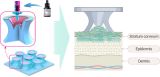
Biomimetic Suction Patch Clinical Study: J Cosmet Dermatol
A co-first-author pilot clinical study that compared a suction-type microstructured patch against ampule alone, side by side on the same face, over four weeks.
I want to make materials and manufacturing processes more predictable. During my master’s, I studied how microstructure and interfaces change a sensor’s performance. Later, on a battery electrode line, I watched up close how process conditions (slurry, coating, calendering) turn into real quality.
Going forward, I want to use computational materials science and machine learning to close the gap between atomic-scale features and what actually happens in process and performance.
Download full CV (PDF) ↗ · Google Scholar ↗ · ORCID ↗

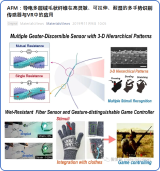
I built fine hierarchical structures on fiber surfaces and made them conductive, creating a multimodal sensor that stretches well and remains durable under moisture and wet conditions. The electrical signal stayed stable even under large deformation, and the work showed how microstructure geometry governs electrical conduction and sensing in stretchable nanocomposites. It ran as the Back Cover of Advanced Functional Materials issue 50, 2019, and has been cited more than 140 times (Google Scholar).
Conductive Hierarchical Hairy Fibers for Highly Sensitive, Stretchable, and Water-Resistant Multimodal Gesture-Distinguishable Sensor. Seunghoon Choi†, Kukro Yoon†, Sanggeun Lee, Heon Joon Lee, Jaehong Lee, Da Wan Kim, Min-Seok Kim, Taeyoon Lee*, Changhyun Pang*. Advanced Functional Materials 29(50), 2019, 1905808. · Co-first author · Back Cover
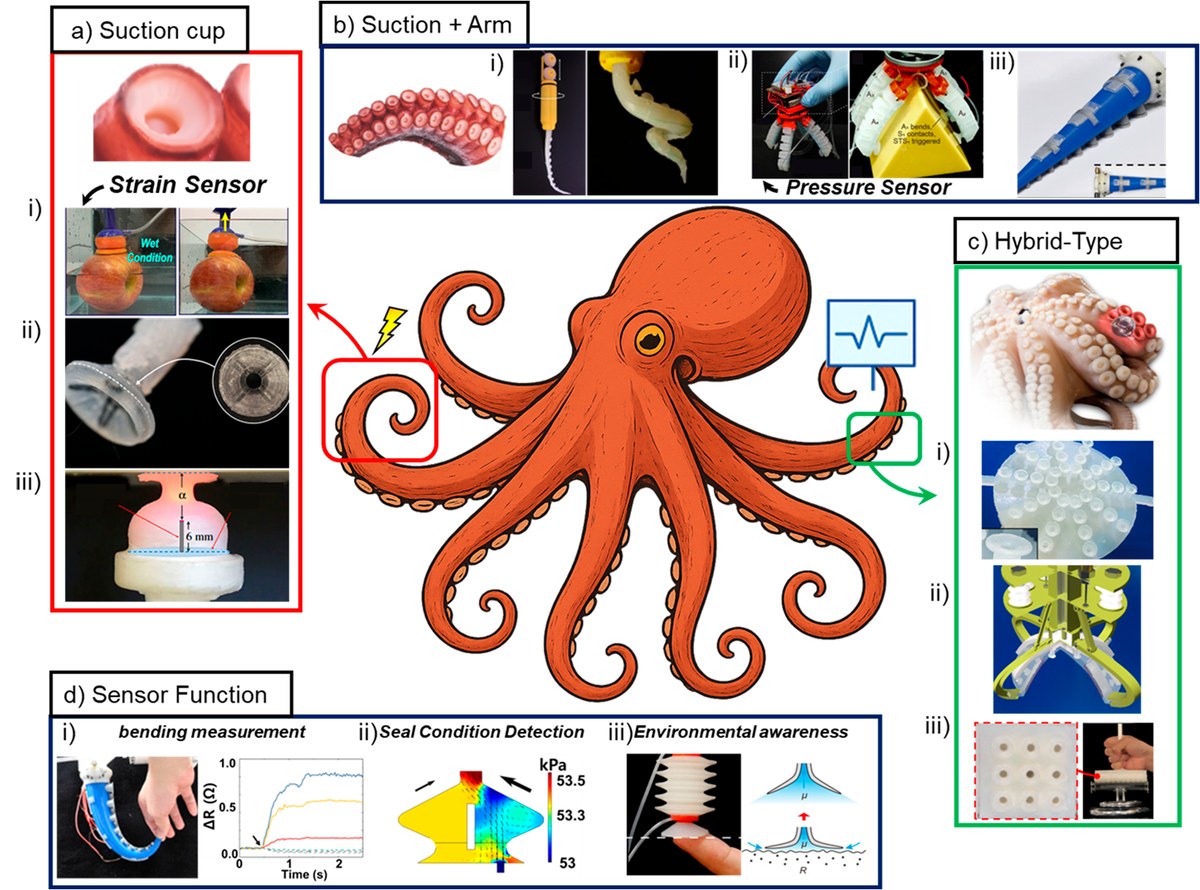
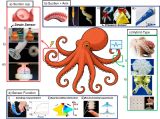
A review of soft grippers inspired by the octopus, its arms, suction cups, and pliable body. It covers structural design, sensing elements, control strategies, and AI applications, and analyzes how geometry and material choice shape adhesion and sensing. It interprets bio-inspired structures from an engineering design perspective, and connects to how I now approach microstructure, interface, and sensing problems.
Design and Sensing Frameworks of Soft Octopus-Inspired Grippers Toward Artificial Intelligence. Seunghoon Choi†, Junwon Jang†, Junho Lee, Da Wan Kim*. Biomimetics 2025, 10(12), 813. · Co-first author
Note: † Equal contribution · * Corresponding author · Bold indicates Seunghoon Choi
No matching results.
A co-first-author pilot clinical study that compared a suction-type microstructured patch against ampule alone, side by side on the same face, over four weeks.
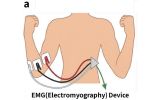
A co-first-author study of an octopus-sucker-inspired microstructure that measures EMG signals on dry and wet skin.
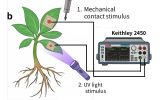
A co-first-author study of a hydrogel electrode that adheres to rough, moisture-changing leaf surfaces and records electrical signals.
A co-first-author review comparing the structures, sensing approaches, and control methods of octopus-inspired grippers.
MaterialsViews China introduced in Chinese our fiber-sensor research published in Advanced Functional Materials.
Adv. Funct. Mater. 50/2019
Our bioelectrical-signal sensor inspired by octopus suckers received a Best Poster Award at the 2018 MRS Fall Meeting.