AI Is Not Advancing Too Fast: Global Warming, Hair Loss, Aging, and Moon Bases Are Still Unsolved
Before saying AI is too fast, we should ask which problems humanity still has not actually solved. If we cannot even build a moon base yet, we need the ability to install, run, and fix answers in the real world, not slower tools.
Contents
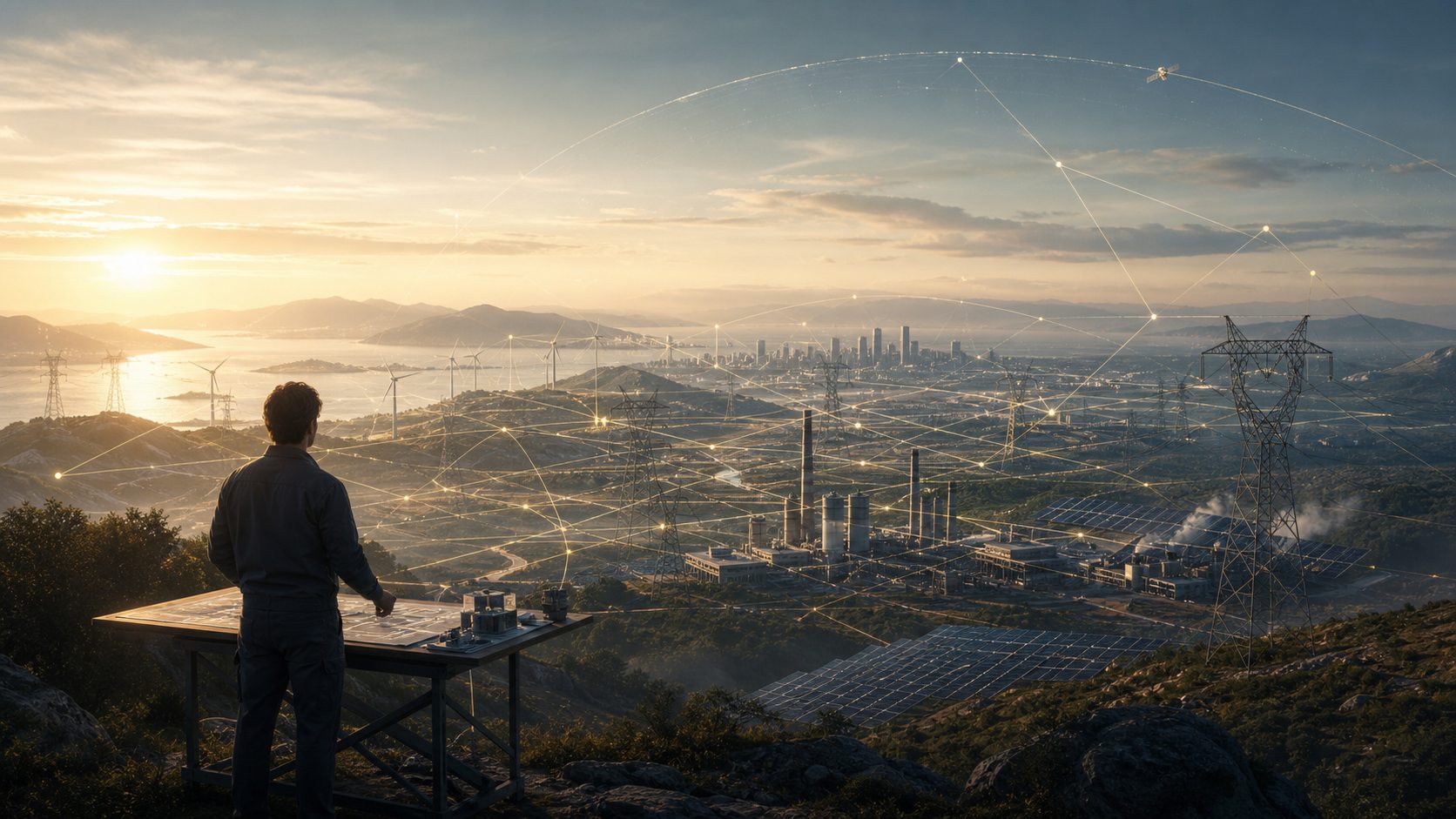
The reason AI seems fast is not because it solves the entire problem, but because it quickly processes the part with organized data.
Global warming remains unsolved. So do hair loss and aging, and humanity still has no lunar base. We also cannot freely control cancer, dementia, commercial fusion power, or extremely low-cost energy infrastructure. Yet people say AI is advancing too fast.
That claim sounds strange to me. AI can write, code, and generate images quickly. But measured against global warming, aging, hair loss, and a lunar base, it is not moving too fast. Ask whether it has solved our most important problems, and the answer is still mostly no.
The question should change. Instead of asking whether AI is advancing too fast, we should ask how we expect to solve these problems if the AI we have is still not capable enough.
What is so fast?
AI feels fast because visible outputs have become faster. Drafts that used to take days appear in minutes. Searching, sorting, coding, design, and translation all start faster than before.
But big problems are not documents. Climate work needs power plants, grids, batteries, factories, mines, ships, aircraft, cities, agriculture, finance, and politics to move together. Hair loss, aging, cancer, dementia, and a lunar base also depend on biology, hardware, institutions, money, safety, and time.
By that standard, AI is still slow. The speed we feel is the speed of work that ends at the computer, such as documents, code, and design drafts. Real change happens in power plants, factories, hospitals, labs, and public institutions.
We have solved very few big problems yet
In one sense, “AI is too fast” is true. Companies, schools, creative markets, and office jobs are shaking. Some people lose time to adapt, and some jobs can shrink quickly.
But open the list of bigger problems and the feeling changes. Global warming has not stopped. Power grids are not changing fast enough. Batteries still need to be cheaper, safer, and longer lasting. Drug development is still slow and expensive. Humans still age, lose hair, and collapse in front of cancer and dementia.
AI product releases are fast. Humanity’s speed at finishing problems is still slow.
How would we solve those problems without AI?
AI can calculate, predict, and design. But it cannot build a power plant by itself. It cannot lay transmission lines. It cannot commission a carbon capture plant. It cannot secure permits for a mine. It cannot persuade residents who oppose a project. It cannot open broken equipment in the field and repair it.
It also cannot smell a factory defect and decide, “This problem is not in the data.” So the human needed next is not a human who calculates better than AI. It is a human who actually realizes AI-made possibilities in the real world.
Reality is not a database
The core is more direct than that. Humans are needed not because AI is weak. Humans are needed because reality is not a database.
Energy transition needs people and AI together
Climate action alone makes this clear. IPCC AR6 WGIII treats climate response not as a single technology problem, but as a system transition involving energy, industry, cities, land, policy, finance, and international cooperation. In other words, human organizations are needed to turn calculations into infrastructure and institutions. AI can say, “For this region, renewable energy, batteries, and transmission lines should be arranged this way.”
But what comes next is human work: securing land, negotiating with residents, construction, safety management, quality control, maintenance, regulatory response, accident responsibility, cost adjustment, and long-term operation. That is employment.
Employment is not simply a way to earn money. It is how large projects keep running in reality.
The energy transition does not end with “install solar.” It needs grids, plants, batteries, nuclear power, hydrogen, transmission, transformers, power semiconductors, mining, refining, manufacturing, maintenance, safety management, and permits.
IEA World Energy Employment 2025 treats shortages of skilled labor as an already important bottleneck in expanding energy infrastructure. In IEA survey results, about 60% of energy-related companies reported labor shortages, and a large share of new energy hiring is needed just to replace retiring workers.
Even if AI accelerates design, the real steel, copper, concrete, semiconductors, factories, and transmission towers are operated by people. Repetitive office work may shrink. But grid engineers, materials researchers, process engineers, robot operators, climate risk analysts, plant commissioning specialists, AI reviewers, safety engineers, regulatory designers, and field integrators become more important. Human employment in the AI era is not just manual labor. It is the point where plans meet reality.
The stronger AI gets, the more it needs reviewers
When an AI-made answer is wrong, the damage can scale too.
If a paper draft is wrong, it can be revised. But if a grid-operation AI is wrong, the result is a blackout. If battery process conditions are wrong, the result can be fire. If a carbon storage assessment is wrong, the result can be leakage. If a space habitat control system is wrong, people can die.
So the AI era needs humans who verify AI outputs against real-world risk. AI proposes. Humans see where that proposal can break in reality.
This is the core of high-level employment going forward. We do not only need people who “know how to use AI.” We need people who can check AI-made outputs again against safety, cost, responsibility, institutions, and people.

In reality, even after the answer is found, the process of installation, verification, and responsibility allocation takes time.
People finish the work in the field
Employment is not merely “feeding people.” Big problems have to be finished in the field. Someone has to inspect land, bring in equipment, check processes, make data, report accidents, persuade people, and carry responsibility.
That is why the ILO guidelines for a just transition matter. A green transition is not only a technology transition. It has to move together with labor, education, wages, communities, and social dialogue. Systems last when people participate. Systems fall apart politically when people are excluded. Employment is the social stabilizer that lets long projects keep running.
AI automates narrowly defined work, not humanity
AI does not make all humans unnecessary. More precisely, it shrinks work that can be replaced by AI alone. Repetitive document writers may shrink. Simple data-entry roles may shrink. Work that only applies memorized rules may shrink.
But problem definers, AI-output reviewers, field integrators, real-world data generators, exception handlers, and people who run large real-world projects in power plants, factories, hospitals, and infrastructure become more important.
The World Economic Forum Future of Jobs Report 2025 also expects technological innovation and the green transition to significantly reshape jobs and skills between 2025 and 2030. WEF expects structural labor-market change to create both new and declining jobs, with the possibility of net employment growth by 2030 overall.
The point is not that work disappears entirely. It is that the layer of ability demanded from humans changes.
Humans set goals and responsibility
If you tell AI to “solve global warming,” there is not one answer.
Should economics come first? Survival rate? Reducing harm to low-income people? Energy security? Democratic consensus? Speed? Reducing dependence on China? Stable electricity prices?
AI can optimize. But human society has to decide what to optimize. This is not a calculation problem. It is a problem of values, politics, power, and survival strategy. Humans become not simple laborers, but operators of the objective function.
Conclusion: AI needs to get faster
The conclusion is simple. AI creates possibilities. Humans install, test, and operate those possibilities in the real world. AI makes answers. Employment turns answers into work that power grids, hospitals, factories, labs, and institutions can actually use.
Humans are needed not because they are smarter than AI. They are needed because they are responsible for reality. What disappears in the AI era is not the need for humans, but the human role limited to small problems. If humanity is to overcome global crises and expand its zone of survival into space, humans should not try to compete with AI. They should become the people who turn AI outputs into real-world systems.