AI-Era Schools Should Teach Practical Judgment, Not Just Knowledge
AI is already better at explaining knowledge. Schools need to teach students how to apply practical concepts.
Contents
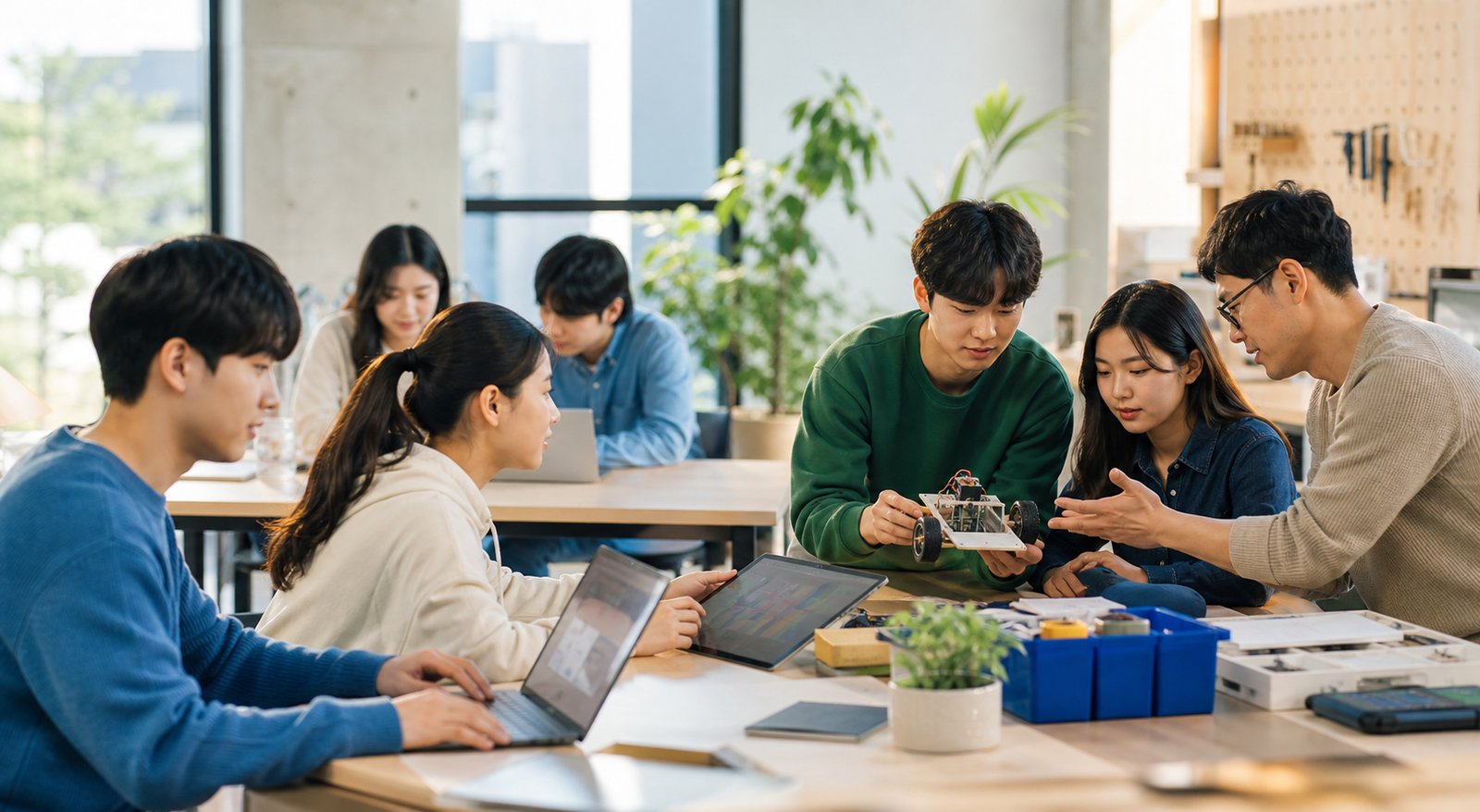
Classes using AI should be a time for students to check and correct their answers, not to write them down.
Ask AI to turn a set of notes into a table, and a table appears in seconds. Ask it to explain something at a high-school level, and it lowers the difficulty. Ask it to turn an idea into a presentation, and it gives you an outline and slide draft.
Research, summarizing, writing, coding, table cleanup, and slide preparation are already tasks AI can handle quickly. Human direction and review still matter, but many assignments where students searched, wrote, made tables, and prepared slides alone will increasingly be handled by AI.
That makes it hard for schools to keep spending most of their time explaining knowledge, making students memorize it, and asking them to reproduce answers on exams.
Schools should teach practical judgment more than knowledge. Students cannot stop at learning how to use AI. Students need to learn practical concepts and apply those concepts to real people, real objects, and real settings. They need to check whether AI’s answers work in reality and revise the parts that fail.
AI Is Better At Explaining Knowledge
This may be uncomfortable for schools to hear. But if we are only talking about explaining knowledge, AI is already very good.
If a student does not understand a lesson, AI explains it again. If the student still does not understand, AI explains it more simply. If the student asks for a different example, AI gives another one. AI can walk through math problems step by step, fix English sentences, and organize historical events in sequence. Students can ask the same question again and again without feeling embarrassed.
Of course AI can be wrong. That is exactly why students need to learn how to question and verify AI’s answers. But explaining concepts is no longer a unique strength of schools. If the function is simply delivering knowledge to students, AI is friendlier than a textbook and cheaper than tutoring.
Yet many schools still teach in the old way. The teacher explains, students take notes, and students memorize the material before the exam. Assignments often look similar. Students search for materials, summarize them, write reports, and make slides.
The problem is that most of these assignments stop at searching for materials, writing, and making tables or slides. Assignments that can be finished alone on a computer are the easiest ones for AI to replace.
High School Needs The Biggest Change
Universities need to change too, but the bigger problem is high school.
High schools still spend too much time training students to find the correct answer quickly. Students memorize concepts, solve problems, and memorize the types they missed. Good scores depend on who can write the correct answer faster and more accurately. Students are trained to solve given problems. More precisely, they are trained to extract predetermined answers.
Basic skills still matter. Students need to calculate, read, and keep a minimum amount of knowledge in their heads. The problem is the share of time. Schools spend too much time on answer-matching. Students spend too little time defining problems, checking them outside the classroom, failing, and revising.
In the AI era, schools need to spend time differently. AI is good at finding answers. What students need to learn more deeply is how to find problems in reality. Students need to identify missing conditions in AI’s answers. Students need to move beyond solving assigned problems and check the discomfort real people actually experience.
The change needs to start in high school. If students spend twelve years getting used to answer-matching, they will struggle to handle real problems in college. Schools should not train students to chase fixed answers and then later complain that students lack creativity.
AI Is Replacing The Work Juniors Used To Do
Entry-level employees will still be needed. Companies need new people. Someone has to become the next working professional, and someone has to become the next manager. The problem is not that juniors are no longer needed. The problem is that AI is replacing the first tasks juniors used to receive at work.
In the past, companies gave juniors relatively easy work. Juniors searched for materials, researched customers, organized meeting notes, and wrote first drafts of reports. Junior developers handled simple code changes or tests. These tasks were not major achievements for the company. But for juniors, they were an important learning process.
Juniors learned work by doing easy tasks. They learned which sources were useful, how complete a report needed to be, where numbers could be wrong, and why a manager asked a specific question. Companies taught juniors how work is done through easy work.
Now AI handles easy work quickly. AI researches materials, summarizes content, drafts text, organizes tables, and writes simple code. An experienced worker using AI can finish work that once took several juniors in much less time. From a company’s point of view, there is less reason to assign easy work just to train a junior.
That changes the standard for juniors. Companies feel that “I do not know yet, but I will work hard to learn” is no longer enough. Companies expect even juniors to have a minimum level of practical judgment. A junior needs to know how to divide work, what to ask AI to do, where to doubt AI’s output, and what to check in the real situation.
This is where schools become more responsible. If companies can no longer spend as much time training juniors through easy work, schools need to provide some of the training before students enter companies. Before graduation, students need to apply a practical concept from beginning to end at least once. They need to research with AI, draft with AI, show the draft to the people who would use it, and revise what does not fit.
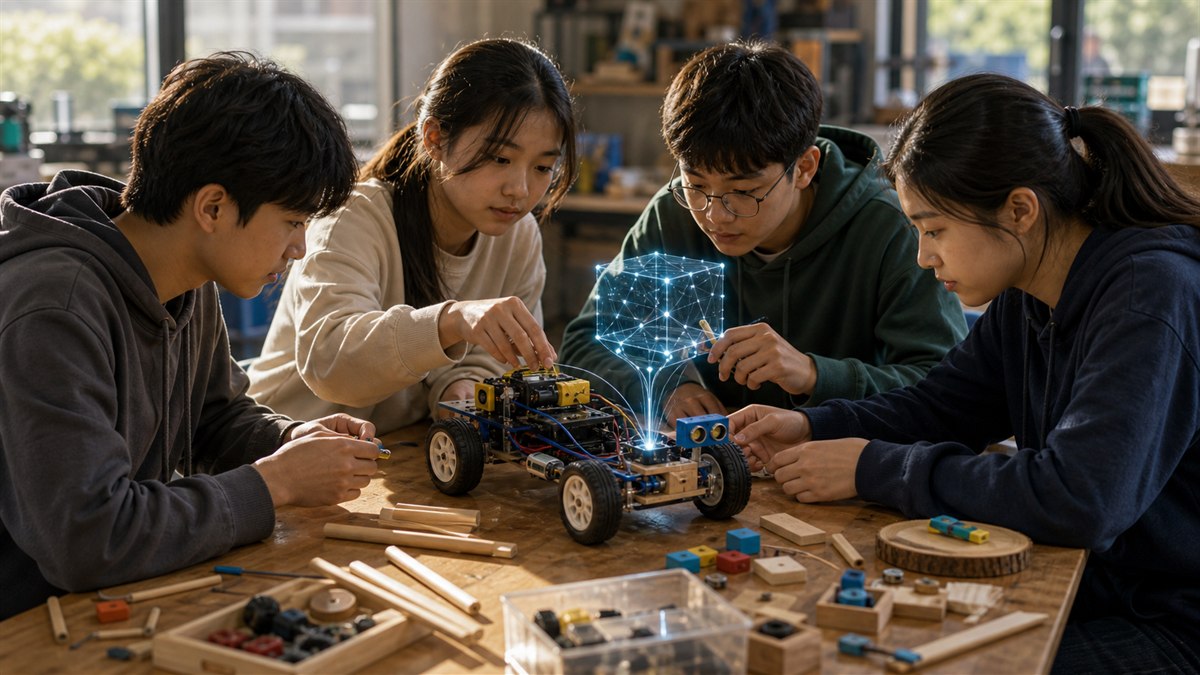
When students find the conditions AI missed outside the classroom, they remember what to question the next time they read an answer.
Students Need To Check Whether AI Fits Real Situations
Future juniors need to know how to give AI structured work. If a junior only says “do this” and hands the whole task to AI, companies will not value that person highly. Juniors need to break the task into what to research, what to compare, what the draft is for, what conditions matter for calculation, and what criteria should be used for review. Then they need to check whether AI’s output fits the real situation.
Real work includes conditions that are not written on the screen or in the documents. Products arrive late, customers change their words, and equipment does not work exactly as planned. People object for reasons that are not written in documents. AI’s answer may look clean, but the real situation may have missing conditions or wrong costs.
So students need to meet people. Students need to look at objects directly. Students need to handle equipment. Students need to ask users what actually bothers them. Students need to apply AI’s plan to a real situation and revise the parts that do not fit.
Practical judgment does not come from lectures alone. It does not come from solving more problem sets. Practical judgment grows when students deal with real people and real constraints.
Schools Should Make Students Apply Practical Concepts
Changing school does not require a grand slogan. It means classes should make students apply practical concepts to real problems.
Students should define a problem themselves. Students should use AI to make a first draft. Students should show that draft to the person who would use it and ask what is missing. They should ask whether that person really has the problem. Students should check whether the result is useful, and if it is not useful, they should find out why.
High school students can do this. They can make a tool that reduces waste inside the school. They can investigate an inconvenient workflow at a local store. They can make a small app or document that their friends actually use. The scale does not matter. What matters is whether there is a real user, a real response, and something that must be revised.
Universities should change even more strongly. Engineering classes should deal with equipment, data, and real constraints. Business classes should deal with customers, prices, and sales. Humanities classes should not stop at submitting essays; they should also deal with work that real readers respond to.
Entrepreneurship education becomes important here too. This does not mean every student has to become a founder. Students need to make something useful to someone, whether it is a small service, an automation tool, a product, or a report. Students need to show the result, get rejected, and revise it. That process builds practical judgment.
Schools Should Leave Students With Output
The standard for a good school will change. A school that only explains a lot of knowledge will have a hard time staying valuable. AI is already too good at explaining knowledge.
A good school is one that makes students use AI while applying practical concepts to real problems. A good school makes students check why what they learned in class does not fit a real situation. A good school does not end failure with a grade; it makes students revise the failed output.
Juniors will still be needed in the AI era. But juniors who can only handle AI answers and documents will be valued less. Companies will look for people who can use AI deeply and apply practical concepts to real situations.
High schools and universities should both face the same question. When students graduate, do they leave with only test scores? Or do they leave with at least one result they showed to a real person, had rejected, and revised?
Schools need to create that difference. Students should use AI at the desk, then stand up and meet real people. Students should not stop at understanding practical concepts in their heads. They should check whether those concepts work in reality.