Decision Authority Does Not Shift All at Once: Stages 9 to 14
Even if AI performs better, decision authority does not transfer immediately. Each time evidence piles up and responsibility is assigned, authority moves toward AI little by little.
Contents
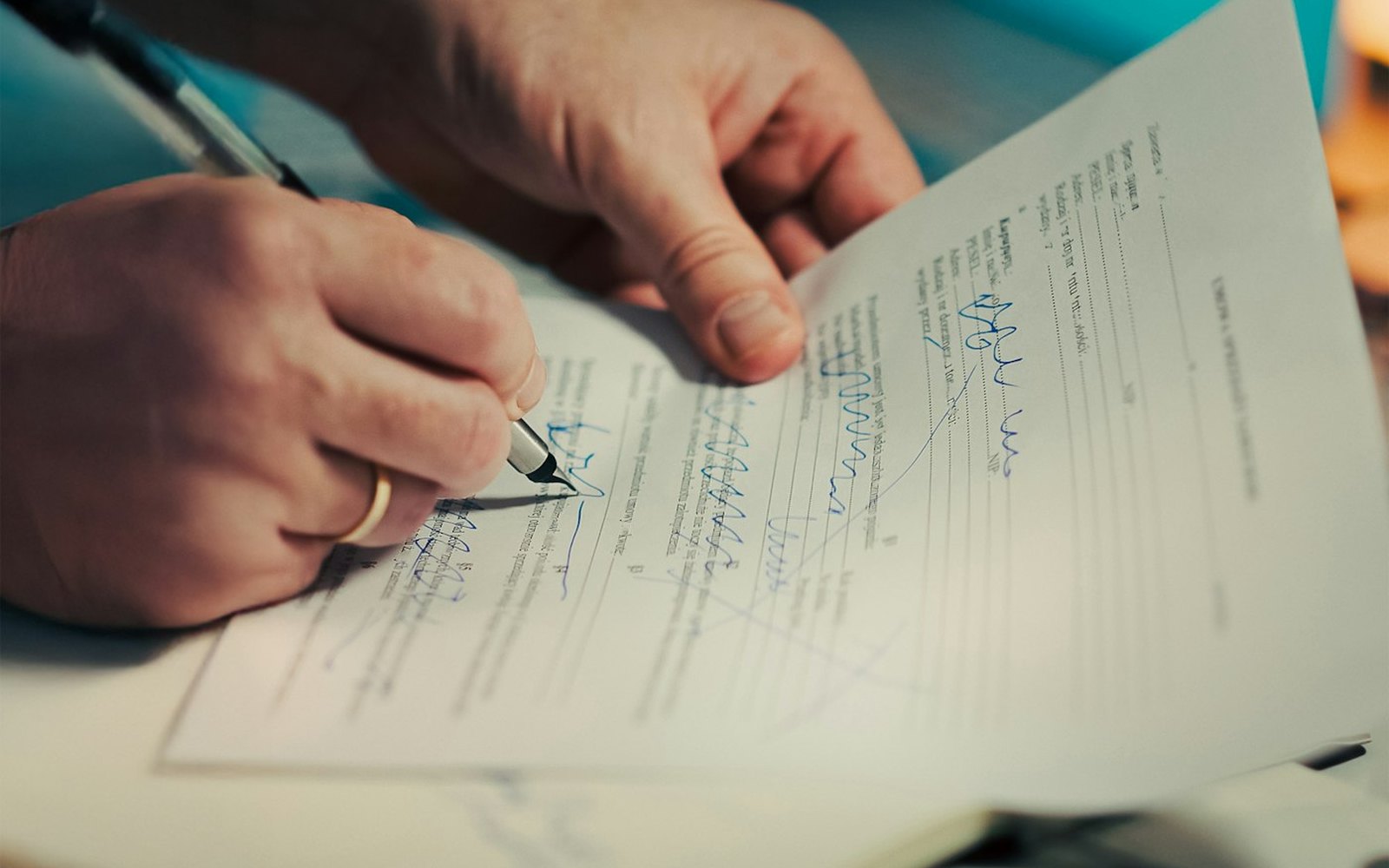
Decision authority does not move just because a table says AI performs better. Someone must be named to take responsibility when an accident happens.
When you get an MRI at a hospital, the suspicious areas may be marked on the screen first. AI scans the image and points to spots that look abnormal. But the person who writes their name at the bottom of the diagnosis and takes responsibility is still the doctor. AI saw the image first. AI found the abnormal region. But the final decision authority remains with a person.
That scene is the key to understanding stages 9 through 14. In the earlier stages, the work was relatively simple. If there was a right answer, if it could be repeated, and if failure could be measured, AI took it quickly. From here it is different. AI does not receive the work immediately just because it performs better. Decision authority, responsibility, law, regulation, and trust are tangled together.
So from stage 9 onward, the question changes. It is no longer only whether AI can do it. The question becomes whether people can entrust the decision to AI.
Stage 9, decision authority begins to be delegated
It is not enough that AI performs a task better than humans. For people to hand over decision authority, repeated evidence is necessary. AI’s error rate has to be far lower than the human error rate, and the difference must keep proving not to be an accident. For example, if AI finds more lesions than doctors in image reading, misses fewer, and that result repeats across hospitals and situations, the story changes.
At first, AI assists. Then people review AI’s judgment. Over time, people approve what AI marked almost as-is. At the end, the person has not exactly judged for themselves. They have become the person who stamps AI’s judgment.
Decision authority does not move all at once. First assistance authority moves. Then practical judgment moves. Finally, only formal approval remains with the person. The area protected by regulation also becomes clear here. Regulation does not protect the whole job. It usually protects the seat of the final responsible person. AI may handle most of the work, but the final signer, approver, and license holder can remain human.
So what is protected is not all labor. It is the seat of responsibility and control. Do not confuse the two.
Stage 10, AI also defends against AI attacks
As AI grows stronger, attacks also grow stronger. Phishing, hacking, manipulation, false information, and automated attacks become hard for people to block one by one. The speed is too fast, the shapes too many, and the volume too large for direct human confirmation. Then defense also moves to AI.
Security AI finds suspicious access, filters fake accounts, predicts attack patterns, and blocks systems automatically. Much of the monitoring and response humans did moves to AI defense systems. The important point is that the control mechanisms themselves are software. The block button, approval procedure, access permission, log monitoring, and human sign-off flow all run on programs. Once AI’s attack capability becomes strong enough, the control systems humans built also become targets.
So the sentence “a human will control it at the end” is weaker than it sounds. Even if someone holds control rights, the meaning shrinks if the control mechanism is breached. From this stage onward, the structure is not humans blocking AI. It is AI blocking AI.
Stage 11, humans review results they do not understand
Experts appear to survive for a long time. An expert can look at a result and catch what is wrong. AI makes a draft, and the expert reviews it. AI analyzes, and the expert finds what is missing. But at some point, a problem appears.
The result AI made becomes too complex for a person to understand as a whole. If the calculation is long, the grounds for judgment are many, and the variables are tangled, even an expert can no longer follow it from beginning to end. Then review becomes closer to formal approval than real review.
The report looks perfect. The logic seems plausible. The numbers look right. But a person still has to separately see whether it fits the actual process, what problems may happen in reality, and what conflicts may arise inside the organization.
The problem is not AI openly saying something false. It is a case where the logic is perfect on the document but misaligned with the real field. At that point, the expert is no longer someone who fully verifies AI. They become someone who states the responsibility and conditions for an AI result.
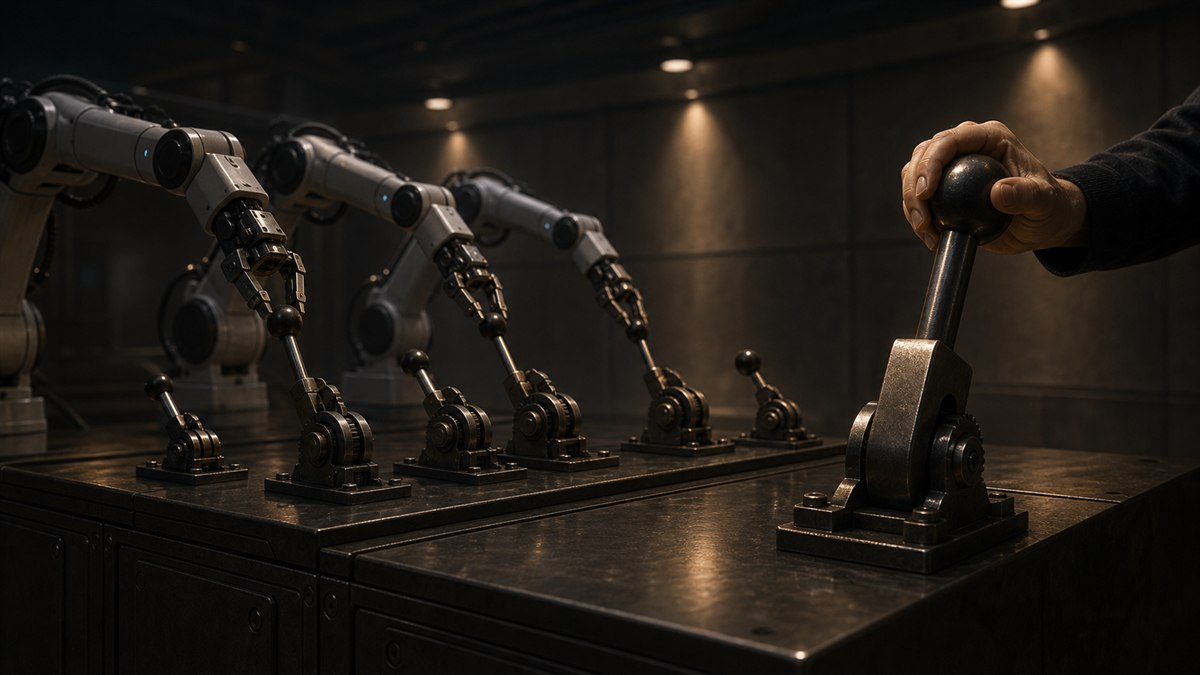
Rather than providing answers on behalf of experts, experts will take on more of a role in clarifying the responsibilities and conditions of the answers provided by AI.
Stage 12, replacement of video and voice
Video and voice are already changing quickly. The key is not simply making fake people. The core is whether actually existing people can be replaced almost perfectly on screen and in voice.
The faces and voices of CEOs, instructors, counselors, show hosts, actors, anchors, and politicians can be reproduced by AI. At first, the awkwardness shows. But over time, the cost of distinguishing rises. Checking whether something is real becomes harder.
Then some of the people on screen become synthetic figures. Further, AI borrowing the face and voice of a real person speaks, explains, and responds in their place. Regulation appears here too. Labels for synthetic media, portrait rights, voice rights, and restrictions on false information become necessary. But regulation does not stop every change. It can stop some misuse and slow the speed. Work that lived from screen presence and voice faces growing pressure.
Stage 13, physical AI also does physical labor that requires judgment
Work with the body lasts longer because the real world is complex. But when robots begin to see with eyes, grasp with hands, learn from failure, and keep accumulating field data, the story changes. First, simple repetitive work is replaced. Then work requiring hand skill shakes. Finally, physical labor requiring judgment also meets physical AI.
Repair, inspection, care assistance, kitchens, logistics, and field management are not jobs done only with the body. They require seeing the situation, choosing an order, avoiding danger, and watching human reactions. These jobs are replaced late. But they are not unreplaced. As sensors improve, robot hands become precise, and simulation and real data accumulate, physical labor mixed with judgment also automates gradually.
What remains here is not the gap in ability. It is how much people value the fact that a person directly does it. Human care, human medical attention, and human service may partly remain. But that is closer to a premium attached to the fact that a human is present, not to function itself.
Stage 14, value judgment begins to be delegated
The last part is value judgment. Most earlier work had results that could be checked. You could see whether it was right, wrong, successful, failed, more efficient, or less efficient. Value judgment is different.
What matters more? Whom should we help first? Which risk should we accept? What counts as fair? What life is better?
These questions do not have one right answer. So AI cannot immediately take this seat just because it is smarter. Value judgment is not a matter of ability. It is a matter of delegation. It moves only when people hand it over themselves.
At first, AI organizes options. Then it compares pros and cons. Over time, people follow the option AI recommends almost as-is. At the end, the phrase “the socially optimal answer calculated by AI” begins to replace human judgment.
This stage arrives late not because AI cannot do it. It arrives late because people have to hand over even the standard of their own lives.
Decision authority moves slowly
The core of stages 9 through 14 is one thing. Even if AI performs better, decision authority does not move immediately.
First AI assists. Then people review AI. Then people approve AI results. Finally, human approval remains only as form.
This does not happen all at once. It moves differently by field, by regulation, and by the way accidents occur. Dangerous AI may not be opened to everyone. In areas where one mistake can create great harm, such as cyber attacks, biological risk, and critical infrastructure, powerful AI may be kept inside the control of states or large organizations. Then the world divides between “people who use AI” and “people who control AI.” Ordinary people use limited AI, while strong AI is used only inside approved organizations.
Still, replacement does not stop. The actor doing the replacement shifts from individual users to states, large companies, and approved organizations. So the seat that remains for humans is not simple user. It is the seat that holds authority, bears responsibility, controls, and owns. Everything whose answer converges eventually moves toward AI. But decisions with no right answer, decisions that require responsibility, and decisions society must permit move slowly.
That slow movement is the core of stages 9 through 14. In the next part, this flow goes deeper. Beyond work automation, ownership and the interests between AI and humans become the next problem.
Series: The 16 Stages of AI Job Replacement, Part 3