From Repetitive Physical Labor to Work Requiring Judgment: Stages 6 to 8
Physical work is replaced later than knowledge work. But if it can be repeated, measured, and its answer converges, it eventually moves to AI and robots.
Contents
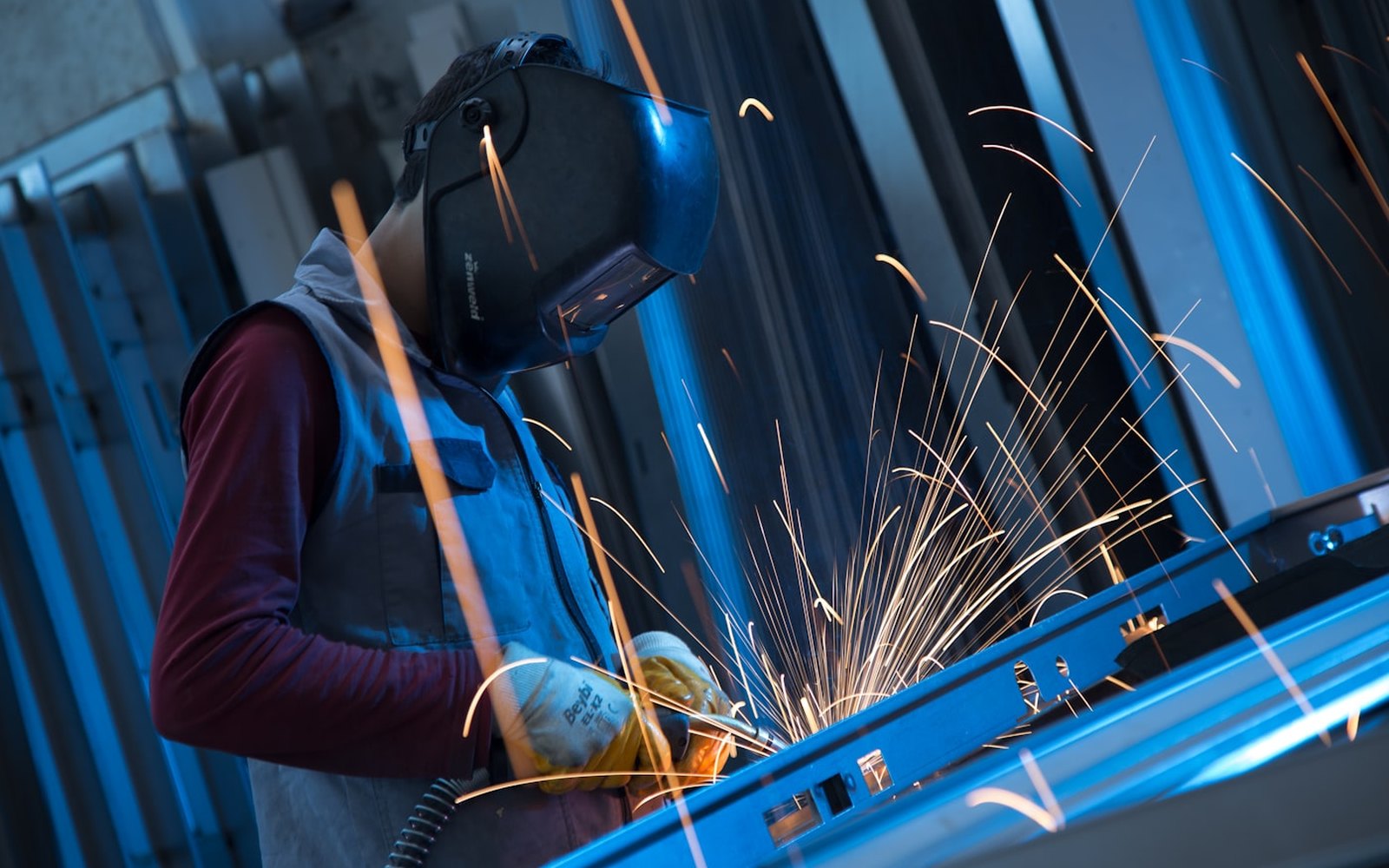
It is difficult for robots to repeat the same actions, not because they lack power, but because conditions vary at each work site.
If AI automates tasks with checkable answers first, the next question is whether physical work is safer from automation.
Translation, coding, summarization, and analysis are usually work whose results can be checked on screen and revised again. If they are wrong, you can run them again. Physical work is different. A robot has to move, objects collide, materials are ruined, and people can get hurt.
So physical labor is replaced later than knowledge work. But later does not mean safe. It takes longer because trial and error in the physical world is costly. When the cost of robots seeing, picking up, moving, and learning from failure falls, body work also faces replacement pressure in order.
This piece looks at stages 6 through 8. Stage 6 is repetitive physical labor. Stage 7 is work that requires hand skill and field trial and error. Stage 8 is work that needs judgment and sense. The key standard is one thing: work that can be repeated, whose failures can be measured, and whose answer converges eventually moves to AI and robots.
Stage 6, repetitive physical labor
The first body work to shake is repetitive physical labor: picking the same part in a factory, driving screws in the same place, welding the same point, moving goods in a warehouse, cleaning along a fixed path, packaging by a fixed procedure.
This work has been automated for a long time. Robot arms in car factories are not unfamiliar. In work that repeats the same motion all day, humans are not at an advantage. People get tired, lose focus, and make mistakes. Machines repeat the same motion continuously.
But older robots needed the environment to be highly organized. Parts had to be in fixed positions, and motion had to stay within a prewritten path. If the situation changed even a little, they stopped. What changes now is this: AI sees the surroundings through cameras, identifies object positions, and adjusts motion to slightly different situations. If an object is a little crooked, it still picks it up. If the route changes slightly, it calculates again. Then the range of repetitive work robots can handle widens.
What is replaced here is not all physical labor. It is physical labor with high repetition, somewhat controllable environments, and failures that can be corrected quickly. Places where the environment can be designed, such as factories, warehouses, kitchens, and logistics centers, change first. Work where the environment differs every time, continuous interaction with people is needed, or mistakes are costly comes later. So using the body does not make work safe. Among body jobs, repetitive work moves to robots first.
Stage 7, work that requires hand skill and field trial and error
Next comes work that requires hand skill and field trial and error. From here it becomes much harder because the work is not simply repeating the same motion. Welding, piping, repair, construction, fine assembly, medical procedures, and lab work combine fingertip control with field judgment. This work lasts longer. Not because hand skill is sacred, but because every real-world failure is expensive.
If code is wrong, run it again. If a sentence is bad, rewrite it. But if welding is wrong, the material is ruined. If a pipe is repaired incorrectly, it leaks. If construction is wrong, you have to tear it out. If a medical procedure is wrong, a person gets hurt. If an experiment is wrong, reagents and time disappear.
Trial and error in the real world is expensive. So AI and robots learn slowly. They need to try many times and be wrong many times, but each “wrong experience” costs money, time, and risk. But this does not mean it is safe forever. In labs, robots are already mixing materials, observing reactions, reading data, and choosing the next experiment. In manufacturing sites, sensors and cameras read work states, and robots learn finer motions.
It begins in organized environments. Then it moves little by little into environments with more variables. Once failure cost falls and simulation and real data accumulate, hand skill also becomes an area that can be learned. The core of Stage 7 is this: hand skill and field trial and error are replaced late. But they are not unreplaced. They arrive late because learning in reality is expensive.
The moment that cost falls, this area shakes too.
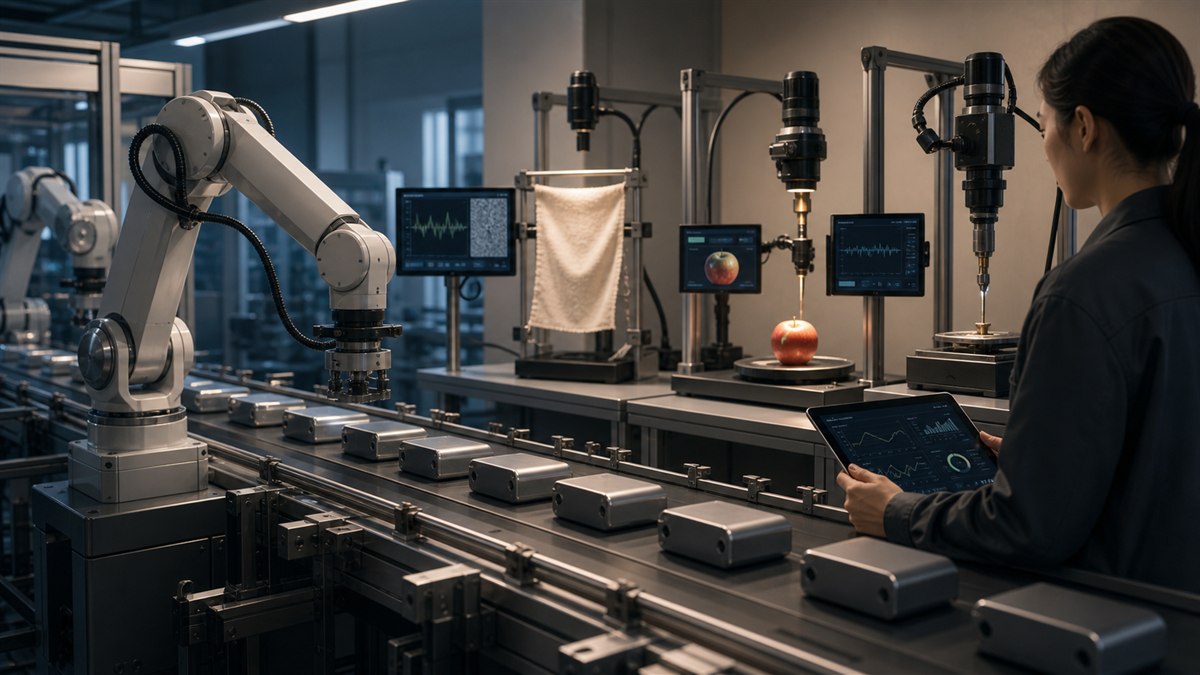
Field sense is a judgment standard created by workers through repeated failures and corrections.
Stage 8, work that needs judgment and sense
The last part is work that needs judgment and sense. People often say, “Only someone who has done this for a long time knows.” “This is feel.” “Data cannot do this.”
There is some truth there. Fields contain senses that are hard to explain in words: a mechanic who hears something wrong in an engine, a doctor who senses something off in a patient’s expression and atmosphere, an engineer who feels uneasy while reading process data even though the numbers do not clearly explain it. But do not treat sense as one lump. Sense splits into two.
One is a sense whose right or wrong is confirmed over time. This engine seems likely to fail soon. This patient is likely to have a specific disease. This customer seems likely to churn. This process condition seems likely to create defects.
This sense is hard to explain, but it is still prediction. Time reveals whether it was right or wrong. Once right and wrong can be checked, AI becomes strong. It sees countless cases, catches tiny signals people miss, and learns which patterns lead to actual results. Part of what looked like a veteran’s intuition becomes a gradable prediction. AI can take that kind of sense.
The other is a sense that reads high-level context.
This is different from simple prediction. Should I put my own money behind this direction? Should I push this business? Should I trust this person and go together? Should I accept this risk now? What should matter more?
Here, sense is not only the ability to predict correctly. It is reading situation, people, responsibility, timing, and possible loss, then choosing. If it is wrong, I lose. I lose money, time, reputation. This is not merely an answer-matching problem. It is a problem of bearing loss. AI can predict what people will choose. But AI does not want something on its own. More precisely, AI is not the legal and social subject that bears the loss.
So the conclusion of Stage 8 is not simple. Some sense moves over. Especially the kind whose right or wrong is confirmed over time can be done better by AI. But the sense of accepting the loss under my own name when wrong is a different problem. From here, the next stage opens. It is no longer only about ability. It becomes about authority and responsibility.
Body work also shakes first where answers converge
Stages 6 through 8 can be tied into one sentence: body work also shakes first where answers converge. Repetitive physical labor has correct motions. You can check whether something was picked up, moved, or assembled properly.
Hand skill and field trial and error are slower, but results appear. You can check whether the weld was good, the repair succeeded, and the experiment produced results. Part of a veteran’s sense is graded over time. Did the failure happen? Was the disease right? Did the customer leave? Did the defect occur? If it can be checked, it becomes data. If data accumulates, AI learns.
So physical labor and sense are automated later than knowledge work, but the principle is the same. What converges toward an answer is followed by AI. Work that moves real equipment and people changes more slowly than screen-based work. Failure costs more, robots have to move, safety issues exist, and legal responsibility attaches. So physical work lasts longer. But lasting longer and being safe are different.
What remains now is not ability, but authority
Up to here, the story has been about ability. Once AI and robots become able, repetitive physical labor shrinks. Hand skill and trial and error gradually automate. Even veteran sense is replaced where it can be predicted. Then what remains at the end?
Not the ability to be exactly right. Not the ability to move hands. Not experience itself. What remains is the seat that chooses and takes responsibility.
Who loses if it is wrong? Who makes the final decision? Who is legally responsible? Who accepts the risk and pushes forward?
AI’s ability alone cannot answer these questions. They are about whom society gives authority to and whom it holds responsible. From the next stage onward, the nature changes. The question is no longer whether AI is better. It is whether humans hand over decision rights. The next piece covers stages 9 through 14: how decision authority, defense systems, results people do not understand, video and voice, judgmental physical labor, and value judgment move to AI.